Boca Grande Pass vs. Gasparilla Sound: How to Choose Your Waterfront Side
Boca Grande Pass waterfront homes face the open Gulf with deep-water boating access through one of Florida’s most legendary tarpon channels — typically $4.5M to $12M+ for a parcel with a usable dock. Gasparilla Sound homes face the back bay, offering calmer water for paddleboarding, more affordable entry between roughly $2.2M and $6M, and unobstructed sunsets over Charlotte Harbor. The Pass-side rewards committed offshore anglers and big-boat owners. The Sound-side rewards families with young kids, sunset chasers, and buyers who prefer working docks over deep keels. On Gasparilla Island’s seven-mile sliver, the side you pick shapes your entire ownership experience — boat traffic, dock build cost, FEMA flood class, hurricane exposure, and resale velocity all differ. Below is the unfiltered local breakdown of both sides, what your money actually buys in 2026, and the three questions you should answer before you fly in to tour.
The geography that defines the choice
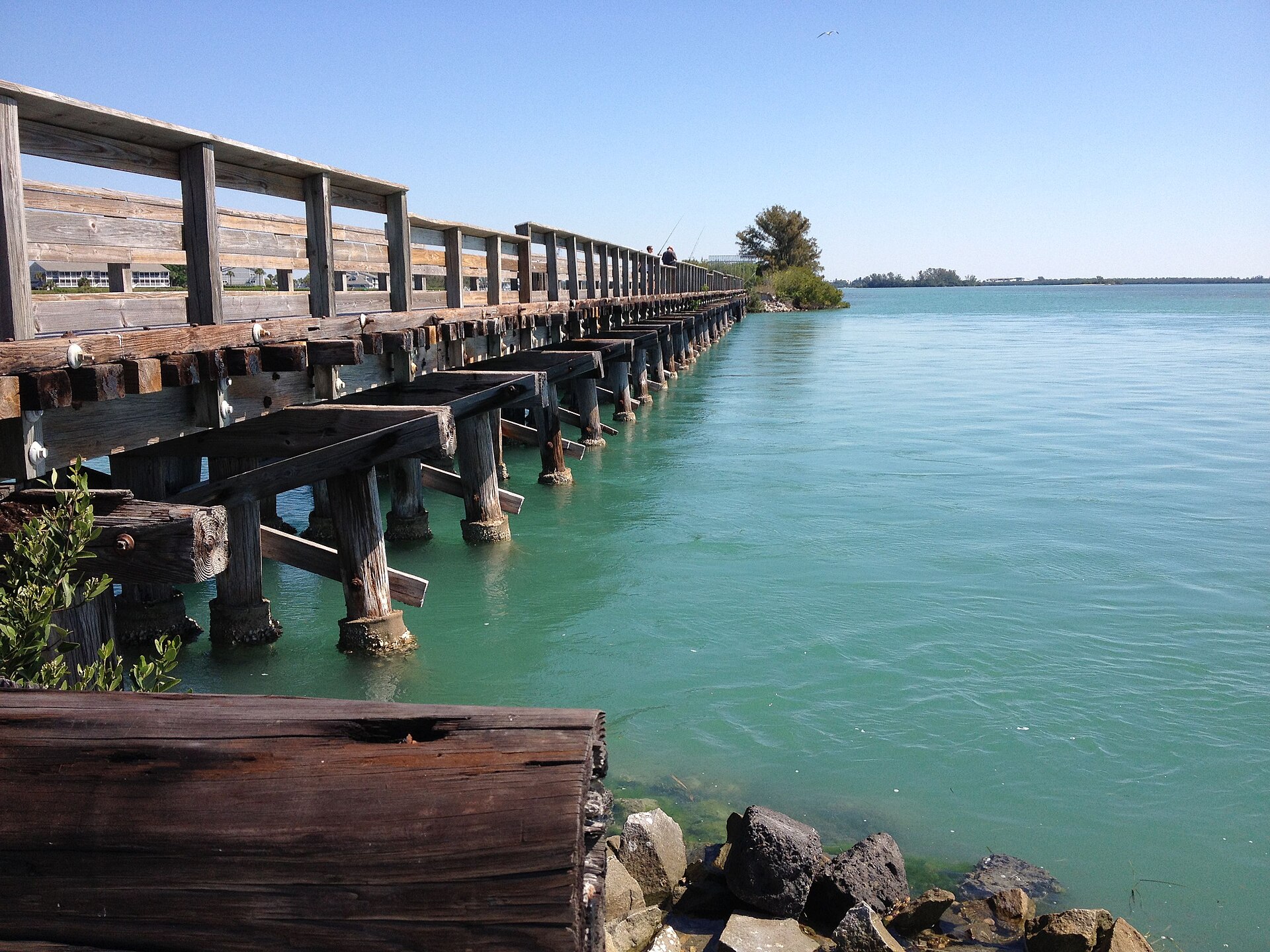
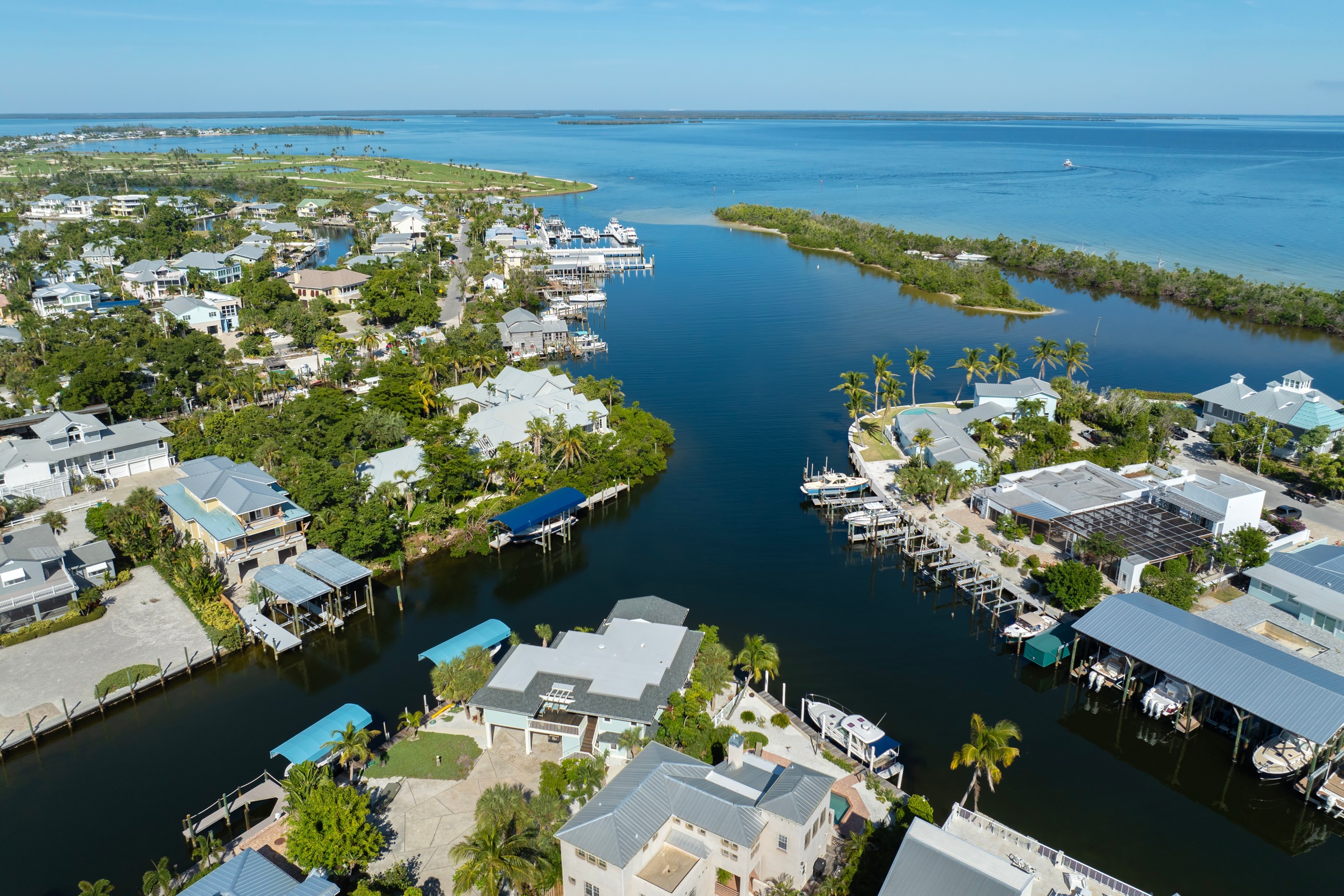
Gasparilla Island runs roughly seven miles north-to-south at the southern mouth of Charlotte Harbor. To the west is the Gulf of Mexico, separated from the back bay by a barrier-island land mass that’s never wider than a half-mile. To the east is Gasparilla Sound, a protected lagoon system that drains the Peace and Myakka rivers through Charlotte Harbor. Between the island’s southern tip and Cayo Costa sits Boca Grande Pass — a 70-to-80-foot-deep natural channel cut by tidal flow and revered as the “Tarpon Capital of the World.”
Choosing your side comes down to which body of water you wake up to.
A Pass-side home in the Boca Bay or Banyan Street corridor faces big water, big sunsets behind your own dock, and direct deep-water access. A Sound-side home in Hill Tide Estates or the Bay Bridge corridor faces calmer water, manatees in your seagrass, and sunset over the mainland skyline.
I’ve walked buyers through both sides for years. The same client who fell hard for a Pass-side estate at 10 a.m. has been known to write a higher offer on a Sound-side home by 4 p.m. The water tells you which side fits you — but only if you know what to listen for.
What Boca Grande Pass waterfront actually means
When a Gasparilla Island listing says “Pass-side” or “Gulf-front,” here’s the operational reality:
Depth at dock. Most Pass-side parcels have natural depths of 6–12 feet at MLW (mean low water) within 50 feet of seawall. That means you can keep a 38-foot center console, a 55-foot Hatteras, or even a small yacht on a lift without dredging concerns. The Pass itself drops to 70+ feet within a quarter-mile.
Boat traffic. From May through July, Boca Grande Pass is the busiest tarpon fishery in North America — there can be 80+ boats on the hill on a strong outgoing tide. If your dock faces the Pass, you’ll have a front-row view of the world’s largest gathering of professional tarpon guides. This is either the best part of ownership or the noisiest part of ownership, depending on who you are.
Sunset orientation. West-facing. Every night. Year-round.
Wind exposure. Pass-side parcels take direct Gulf wind. During the November–March cold front season, sustained 20–25 mph westerlies are routine. Your screen enclosure, your dock pilings, and your insurance premium will reflect this.
Permitting. New dock construction on the Pass side requires Florida DEP and U.S. Army Corps of Engineers sign-off, in addition to Town of Boca Grande review. Expect 9–14 months from application to first piling, and budget $180k–$450k for a permittable 2026 lift-and-decking build depending on length and water depth. Source: Florida DEP Submerged Lands & Environmental Resources Coordination.
Insurance. Pass-side parcels are almost universally in FEMA flood zone VE — the highest-risk wave-action category — which doubles or triples flood insurance versus zone X. Verify your specific parcel at the FEMA Map Service Center before you write an offer.
What Gasparilla Sound waterfront actually means
Cross the island and the same questions get very different answers.
Depth at dock. The Sound is shallow. Many lots have 2–4 feet at MLW within 100 feet of seawall, which means you’re either building a long T-dock to find depth, dredging a permitted channel, or accepting a center-console-only fleet. Buyers planning to keep a 50-foot inboard at home need to verify charted depth before they fall in love with the listing.
Boat traffic. Calm. Working flats boats, paddleboards, kayaks, the occasional offshore boat heading toward the Pass via the Intracoastal. You can swim off your dock without worrying about wake.
Sunset orientation. East-facing toward the mainland. Which means: you watch the sunrise over the water from your dock and watch the sunset reflect off the mainland skyline behind Cape Haze and Placida. Some buyers consider this the better light show. Sunrise coffee on a Sound-side dock is one of the most underrated rituals in Florida real estate.
Wind exposure. Largely sheltered from prevailing winds by the barrier island. During cold fronts, the Sound side gets a fraction of the wave action.
Permitting. Sound-side dock work is generally faster and less expensive — typical 2026 builds run $90k–$220k for a finger pier with a 10,000-lb lift. Seagrass surveys are mandatory and can move the dock footprint, so always permit before you finalize the boat purchase.
Insurance. Most Sound-side parcels are FEMA flood zone AE — still high-risk but materially cheaper than VE. The difference on a $4M home with $500k contents typically lands in the $4,800–$9,200 per year range for the flood premium alone.
Real 2026 price ranges for both sides
These are not Zillow estimates. These reflect actual closings I’ve tracked on Gasparilla Island over the last twelve months, normalized for dock condition and bedroom count:
Boca Grande Pass / Gulf-front waterfront
- Entry: $4.5M–$5.8M for a 3-bed/3-bath cottage on 0.25 acres with an aging dock that needs $200k of work
- Mid-tier: $6.5M–$9M for a 4-bed/4-bath with newer dock and Gulf-view great room
- Estate: $11M–$22M for a renovated or new-build 5+ bed on a half-acre with permitted deep-water dockage
Gasparilla Sound / Back-bay waterfront
- Entry: $2.2M–$3.4M for a 3-bed cottage with a stub dock that needs lengthening
- Mid-tier: $3.6M–$5.2M for a 4-bed with new seawall and functional dock
- Estate: $5.5M–$8.5M for a 5+ bed with deep-water cut and pool
Same square footage, same finishes, same year built — and the Pass-side commands roughly a 1.7x–2.1x premium. The premium isn’t for the house. It’s for the deep water at your seawall and the unobstructed Gulf view.
The five hidden costs nobody mentions
After 100+ Gasparilla Island showings, here are the costs most buyers learn about after they’re under contract:
-
Dock permit timing. A “rebuild your dock” project can take 11–14 months once you account for DEP, ACOE, and Town review. If you close in November expecting to launch the boat by Christmas, you’ll be disappointed. Permit before you close when possible.
-
Hurricane insurance combined with flood. A Pass-side 4-bed lands at $32k–$68k per year for combined wind + flood in 2026 markets, with $25k–$75k named-storm deductibles. The Citizens Insurance assumption letter alone can take 60 days.
-
Club initiation. The Gasparilla Inn Beach Club and the Gasparilla Inn Golf Club have separate memberships, separate waiting periods, and separate initiation costs that can exceed $200k combined. Some Pass-side estates carry transferable memberships — confirm in writing before assuming.
-
Boat storage off-island. If your dock can’t fit your boat, the nearest dry-stack and wet-slip alternatives are in Placida or Cape Haze, with 2026 monthly costs of $1,400–$3,800 plus transportation logistics every time you want to use the boat.
-
Construction surcharges. Building costs on Gasparilla Island run a 35–55% premium over mainland Charlotte County due to bridge access, parking restrictions, and 6 a.m.–6 p.m. construction windows. A renovation that pencils at $400/sq ft in Punta Gorda will pencil at $580–$620/sq ft on the island.
Three questions to answer before you tour
When buyers reach out to me through OceanFL’s private-tour request form, I ask the same three questions before booking anything. These cut the tour list in half before we ever cross the bridge:
1. What is the biggest boat you actually own or plan to own in the next 24 months?
If the honest answer is a 24-foot bay boat, the Sound side gives you 80% of the lifestyle at 50% of the basis. If the answer is a 48-foot Viking, you have one realistic side of the island to look at.
2. How many days a year will the home actually be occupied?
A 40-day-a-year second home owner often gets crushed by Pass-side insurance and dock maintenance carrying costs. A 180-day-a-year primary or hybrid owner can absorb those costs because the per-day cost amortizes differently.
3. Sunrise person or sunset person?
Pass-side gives you Gulf sunsets every night. Sound-side gives you bay sunrises every morning. Most buyers think they want sunsets. Half of them, after spending one slow morning on the Sound-side dock, change their mind.
How buyers actually decide — three real client patterns
I’ll share three composite stories from 2024–2026 closings on Gasparilla Island (details adjusted for client privacy):
The retired offshore captain. Long career running boats out of Sarasota. Sold his business in 2024. Wanted “real water at my dock.” Looked at four Sound-side homes politely, then wrote on a Pass-side property with 9 feet at MLW within his first hour back. Lives there 250 days a year. Was always going to buy Pass-side — the tour was a formality.
The family of five with young kids. Two parents with careers in Chicago, three kids under 12. Wanted swimming, paddleboarding, manatee sightings, no-shoes mornings. Toured the Pass first because “that’s the famous side.” Within 48 hours pivoted to the Sound side. Closed on a 4-bed in Hill Tide Estates that the family uses 90 days a year. Said the calm water made the kid logistics work. Has zero regrets.
The empty-nester couple looking for a 20-year home. Toured both sides over three trips. Made an offer on a Pass-side estate, lost in a bidding war. Pivoted to a Sound-side estate with a deep-water cut and pool. Two years later, told me at a Boca Grande Inn dinner that losing the Pass-side house was the best thing that happened to them — they sleep with the windows open and never hear a boat motor.
The pattern is simple: the right side is the one that matches the life you actually live, not the postcard you’re imagining.
What to do next
If you’re serious about Gasparilla Island, the smartest move you can make right now is to walk both sides on the same day. Same tide, same wind, same time of year. You’ll feel the difference in 90 minutes that articles like this one can only describe.
I keep my tour calendar deliberately small — typically four to six private tour weekends per quarter, by invitation. If you want one of those slots for fall 2026 reconnaissance, request a private tour through OceanFL and tell me which body of water you think you’re buying. I’ll show you both.
Frequently asked questions
Which side of Gasparilla Island has better deep-water access?
Boca Grande Pass / Gulf-front parcels have meaningfully deeper natural water at the dock — typically 6 to 12 feet at mean low water within 50 feet of seawall, with 70+ foot depths in the Pass channel itself. Gasparilla Sound parcels are generally 2 to 4 feet at MLW, requiring longer docks or dredged channels to accommodate larger boats.
Are Boca Grande Pass homes more expensive than Gasparilla Sound homes?
Yes. Based on 2024–2026 closings tracked by OceanFL, Pass-side waterfront commands roughly a 1.7x to 2.1x premium per square foot over comparable Sound-side waterfront. A 4-bed/4-bath Pass-side mid-tier home runs $6.5M–$9M; the equivalent Sound-side home runs $3.6M–$5.2M.
What’s the difference in hurricane risk between the two sides?
Pass-side parcels are nearly all in FEMA flood zone VE — the highest wave-action category — driving higher flood and wind insurance premiums and typically requiring more aggressive elevation and structural hardening. Sound-side parcels are usually in FEMA zone AE, which is still flood-prone but generates materially lower insurance costs. Verify any specific parcel at the FEMA Map Service Center.
Can I build a new dock on Boca Grande Pass?
Yes, but new construction requires Florida DEP, U.S. Army Corps of Engineers, and Town of Boca Grande approval. Realistic timelines are 9–14 months and 2026 build budgets range from $180k to $450k depending on length, lift capacity, and water depth. Repair or rebuild of an existing permitted dock footprint is typically faster.
Which side has better sunset views?
Pass-side waterfront delivers unobstructed west-facing Gulf sunsets every evening. Sound-side waterfront faces east, which means you watch the sunrise over open water from your dock and watch the sunset reflect off the mainland skyline behind you. Roughly half of OceanFL’s Sound-side buyers tell us they didn’t realize how much they would value the sunrise ritual until they lived with it.
Sabatino Campilii is the licensed Florida REALTOR® (SL3363040) behind OceanFL, a private buyer-advisory practice focused on Boca Grande and Gasparilla Island luxury waterfront. OceanFL does not publish addresses, list homes publicly, or work both sides of any transaction. Tour requests are reviewed weekly.
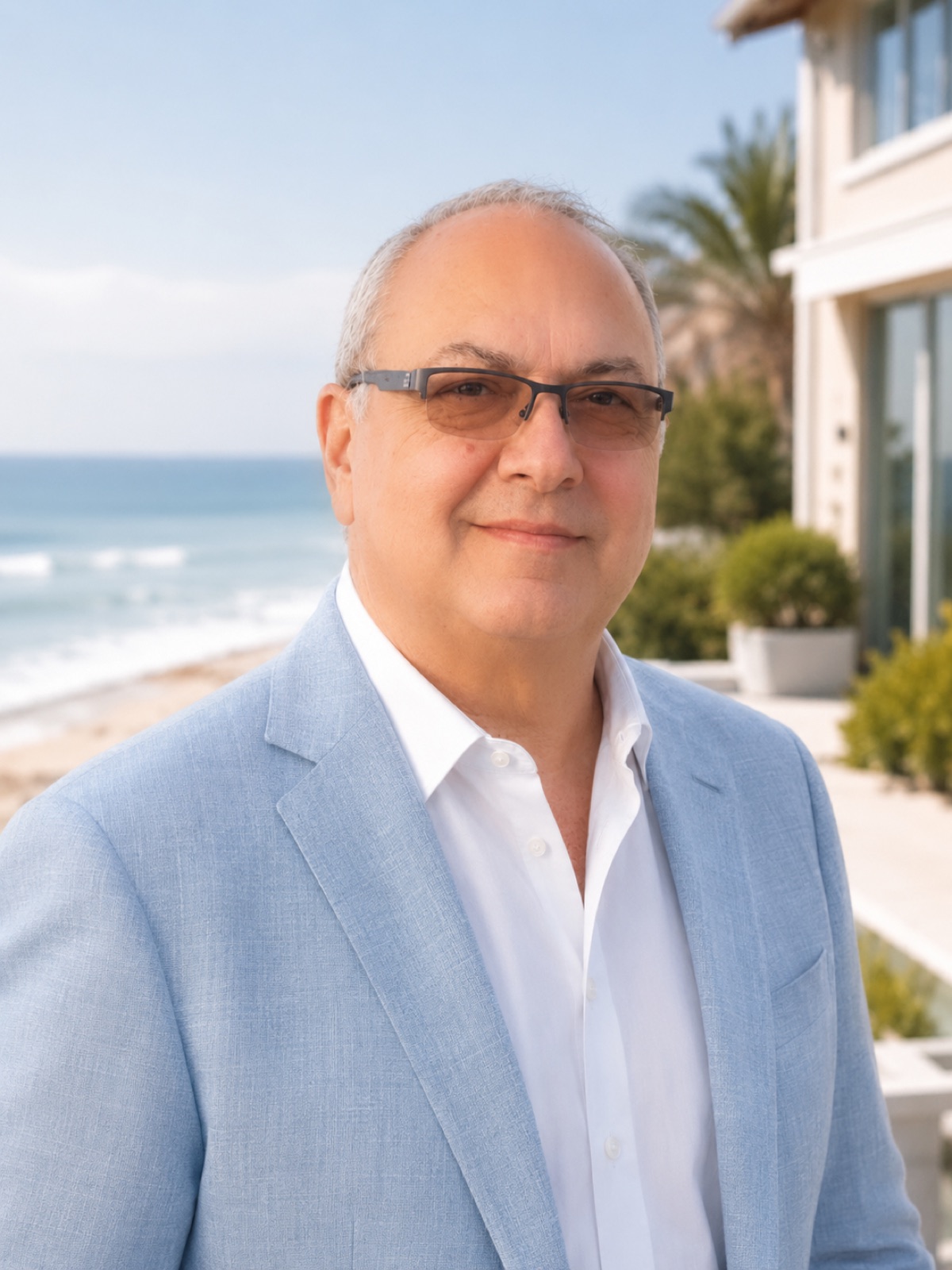
Realtor®, License SL3363040
Engineer, 25-year builder, and licensed Realtor® representing buyers and sellers across the Southwest Florida Gulf-coast pockets. Reviewed and published May 28, 2026.
Have Sabatino represent you — before you call any listing agent.
Start your discovery call →